

Knitting stitch patterns are combinations of knit, purl and other knitting techniques used to create different textures, shapes and decorative effects.
Some patterns are simple enough for complete beginners, while others use techniques such as yarn overs, decreases, slipped stitches, cables or colour changes.
Before beginning a new stitch pattern, it is always helpful to work a small tension square. This allows you to see how the pattern looks in your chosen yarn and helps you check the finished measurements.
Understanding Basic Knitting Abbreviations
The following abbreviations are commonly used in knitting patterns:
- K — knit
- P — purl
- st or sts — stitch or stitches
- yo — yarn over
- k2tog — knit two stitches together
- sl — slip a stitch
Always check the abbreviation guide supplied with the individual pattern, as terminology may vary.
Basic Knitting Stitch Patterns
Garter Stitch
How it is worked:
Knit every row when working back and forth.
Appearance:
Garter stitch creates a soft fabric with horizontal ridges on both sides.
Main characteristics:
It is reversible, stretchy and lies relatively flat.
Suitable for:
Scarves, blankets, borders and beginner knitting projects.

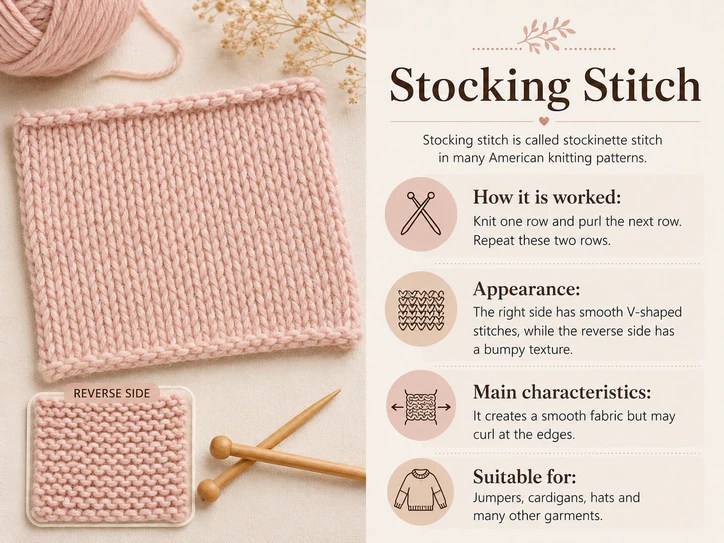
Stocking Stitch
Stocking stitch is called stockinette stitch in many American knitting patterns.
How it is worked:
Knit one row and purl the next row. Repeat these two rows.
Appearance:
The right side has smooth V-shaped stitches, while the reverse side has a bumpy texture.
Main characteristics:
It creates a smooth fabric but may curl at the edges.
Suitable for:
Jumpers, cardigans, hats and many other garments.
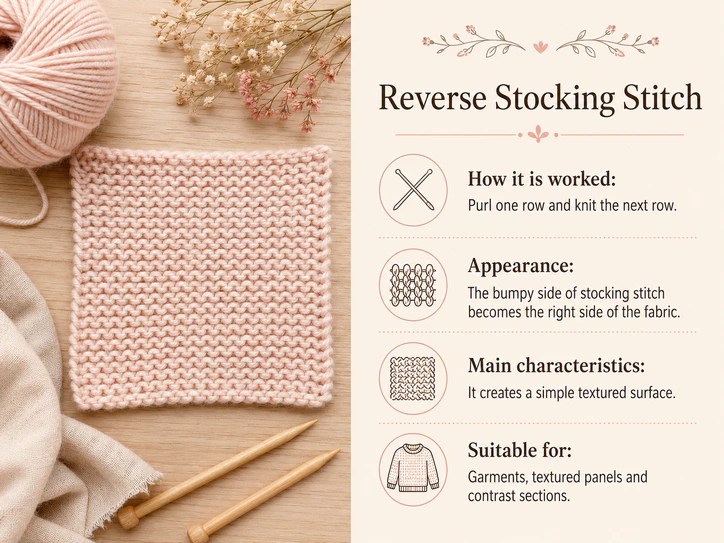
Reverse Stocking Stitch
How it is worked:
Purl one row and knit the next row.
Appearance:
The bumpy side of stocking stitch becomes the right side of the fabric.
Main characteristics:
It creates a simple textured surface.
Suitable for:
Garments, textured panels and contrast sections.
Rib Stitch
How it is worked:
Alternate knit and purl stitches across the same row.
Common examples include:
- K1, P1 rib
- K2, P2 rib
- K3, P1 rib
Appearance:
Ribbing forms vertical columns of knit and purl stitches.
Main characteristics:
It is highly elastic and returns to its original shape after stretching.
Suitable for:
Cuffs, neckbands, sock tops, waistbands and hat brims.

Textured Knitting Stitch Patterns

Seed Stitch
How it is worked:
Alternate one knit stitch and one purl stitch across the row. On the following row, work a purl stitch above each knit stitch and a knit stitch above each purl stitch.
Appearance:
Seed stitch creates a small, evenly textured surface.
Main characteristics:
It is reversible and generally lies flat.
Suitable for:
Scarves, borders, baby blankets and textured garments.

Moss Stitch
The names seed stitch and moss stitch are sometimes used differently in British and American knitting patterns. Always follow the written instructions rather than relying only on the stitch name.
In many British patterns, moss stitch is worked by alternating knit and purl stitches and reversing them on every row.
In some American patterns, the name moss stitch is used for a four-row pattern in which the same sequence is worked for two rows before being reversed.
Appearance:
It creates a firm, pebbled texture.
Main characteristics:
It is reversible and does not usually curl.
Suitable for:
Borders, scarves, blankets and structured garments.

Basketweave Stitch
How it is worked:
Blocks of knit and purl stitches are arranged to create a checkerboard effect.
For example, four knit stitches and four purl stitches may be repeated across several rows before the blocks are reversed.
Appearance:
The fabric resembles a woven basket.
Main characteristics:
It creates a strong geometric texture.
Suitable for:
Blankets, cushion covers, scarves and home accessories.

Honeycomb Stitch
How it is worked:
Honeycomb patterns usually combine slipped stitches, knit stitches or cable techniques.
Appearance:
The finished fabric resembles connected honeycomb cells.
Main characteristics:
It is dense, warm and highly textured.
Suitable for:
Winter garments, scarves, hats and decorative panels.
Lace Knitting Patterns
Lace knitting uses yarn overs and decreases to create decorative open spaces in the fabric.
Feather and Fan
How it is worked:
Yarn overs and decreases are arranged across the row to create repeated waves.
Appearance:
The fabric has a soft, scalloped or wave-like shape.
Main characteristics:
It is light, decorative and relatively easy to memorise.
Suitable for:
Shawls, scarves, blankets and lightweight garments.

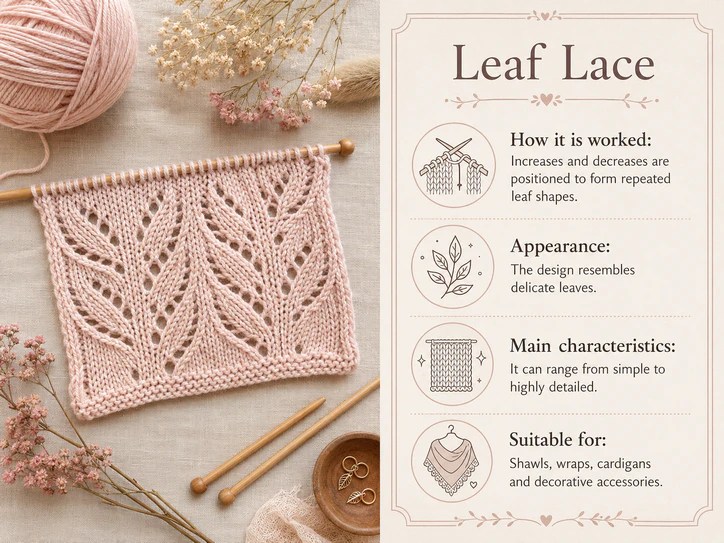
Leaf Lace
How it is worked:
Increases and decreases are positioned to form repeated leaf shapes.
Appearance:
The design resembles delicate leaves.
Main characteristics:
It can range from simple to highly detailed.
Suitable for:
Shawls, wraps, cardigans and decorative accessories.
Diamond Lace
How it is worked:
Yarn overs and decreases are arranged to form diamond-shaped motifs.
Appearance:
The pattern is geometric, open and symmetrical.
Main characteristics:
It creates an elegant decorative fabric.
Suitable for:
Shawls, scarves, panels and summer garments.

Cable Knitting Patterns
Cable patterns are created by changing the order of stitches, usually with the help of a cable needle.
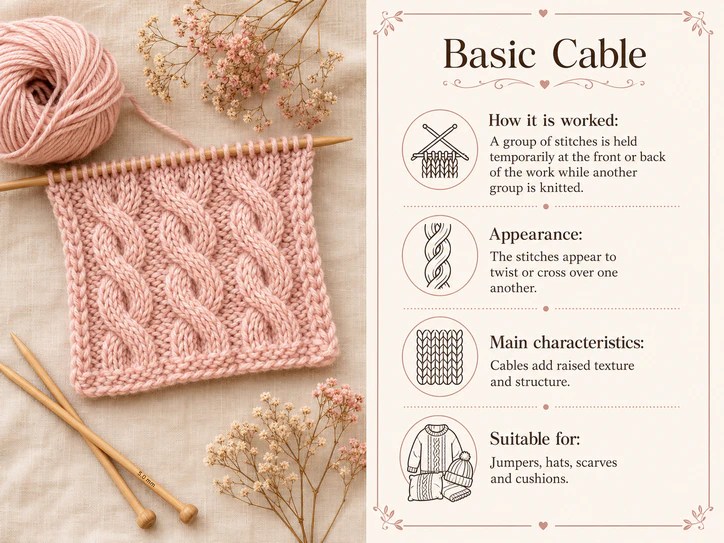
Basic Cable
How it is worked:
A group of stitches is held temporarily at the front or back of the work while another group is knitted.
Appearance:
The stitches appear to twist or cross over one another.
Main characteristics:
Cables add raised texture and structure.
Suitable for:
Jumpers, hats, scarves and cushions.

Horseshoe Cable
How it is worked:
Two cable sections curve away from and towards one another to form a horseshoe-like shape.
Appearance:
It creates a wide, curved cable motif.
Main characteristics:
It is decorative and visually prominent.
Suitable for:
Sweater panels, scarves and blankets.
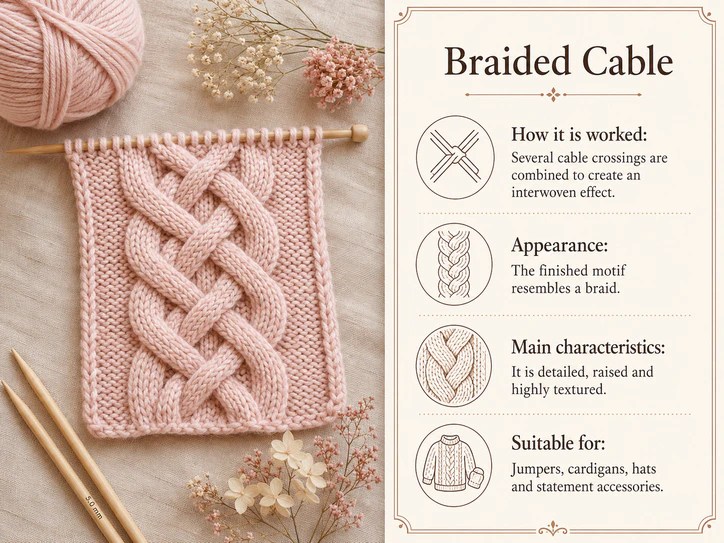
Braided Cable
How it is worked:
Several cable crossings are combined to create an interwoven effect.
Appearance:
The finished motif resembles a braid.
Main characteristics:
It is detailed, raised and highly textured.
Suitable for:
Jumpers, cardigans, hats and statement accessories.
Colourwork Knitting Techniques
Colourwork uses two or more yarn colours to create decorative patterns.
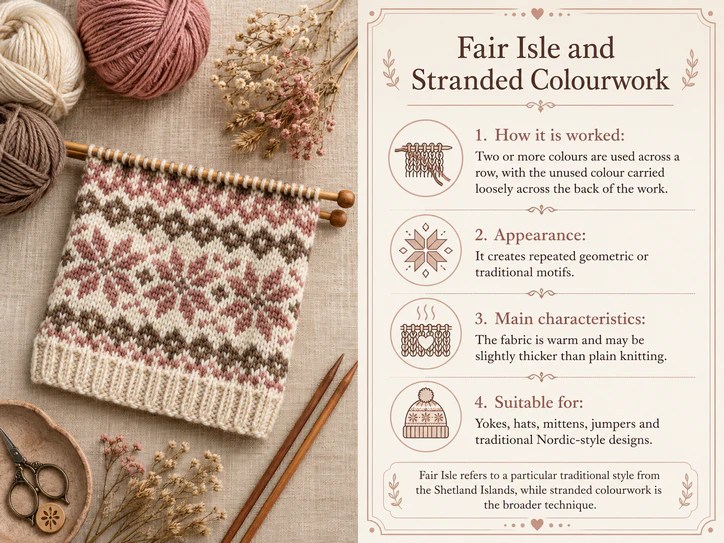
Fair Isle and Stranded Colourwork
How it is worked:
Two or more colours are used across a row, with the unused colour carried loosely across the back of the work.
Appearance:
It creates repeated geometric or traditional motifs.
Main characteristics:
The fabric is warm and may be slightly thicker than plain knitting.
Suitable for:
Yokes, hats, mittens, jumpers and traditional Nordic-style designs.
Strictly speaking, Fair Isle refers to a particular traditional style from the Shetland Islands, while stranded colourwork is the broader technique.

Intarsia
How it is worked:
Separate sections of colour are worked using individual yarn lengths or small yarn bobbins.
Appearance:
It creates large, clearly defined colour blocks or pictures.
Main characteristics:
The unused colours are not carried across the entire back of the work.
Suitable for:
Graphic designs, motifs and large colour panels.

Slip-Stitch Colourwork
How it is worked:
Some stitches are slipped without being knitted while another colour is worked.
Appearance:
The slipped stitches create decorative colour and texture effects.
Main characteristics:
It often uses only one colour in each row and is usually easier than stranded colourwork.
Suitable for:
Scarves, cowls, blankets and patterned garments.
Advanced Knitting Techniques
Brioche Stitch
How it is worked:
Brioche knitting combines slipped stitches, yarn overs and stitches worked together.
Appearance:
It creates deep vertical ribs and a soft, raised texture.
Main characteristics:
The fabric is thick, stretchy and often reversible.
Suitable for:
Scarves, cowls, hats and warm accessories.

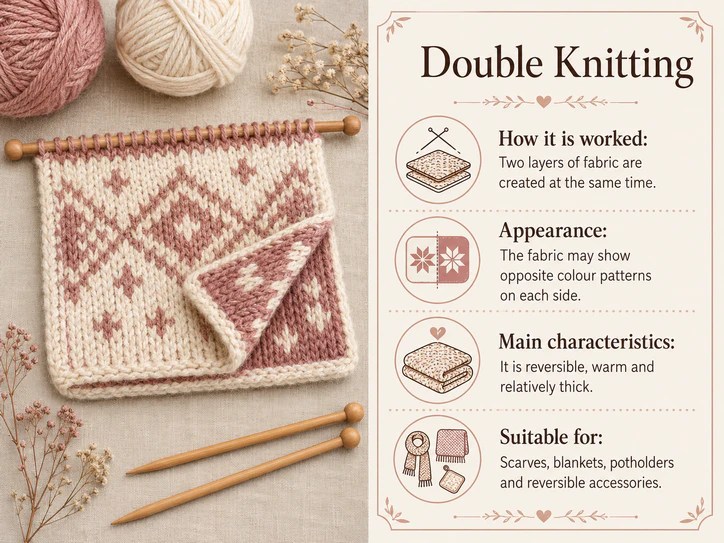
Double Knitting
How it is worked:
Two layers of fabric are created at the same time.
Appearance:
The fabric may show opposite colour patterns on each side.
Main characteristics:
It is reversible, warm and relatively thick.
Suitable for:
Scarves, blankets, potholders and reversible accessories.
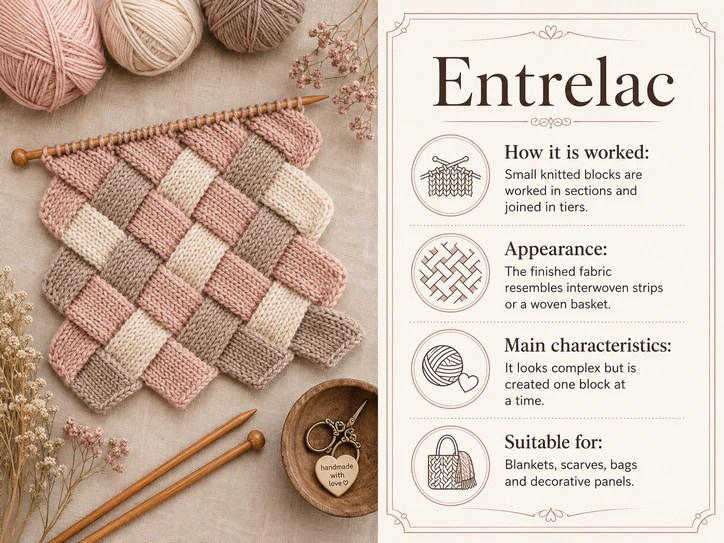
Entrelac
How it is worked:
Small knitted blocks are worked in sections and joined in tiers.
Appearance:
The finished fabric resembles interwoven strips or a woven basket.
Main characteristics:
It looks complex but is created one block at a time.
Suitable for:
Blankets, scarves, bags and decorative panels.
Decorative and Specialty Stitch Patterns
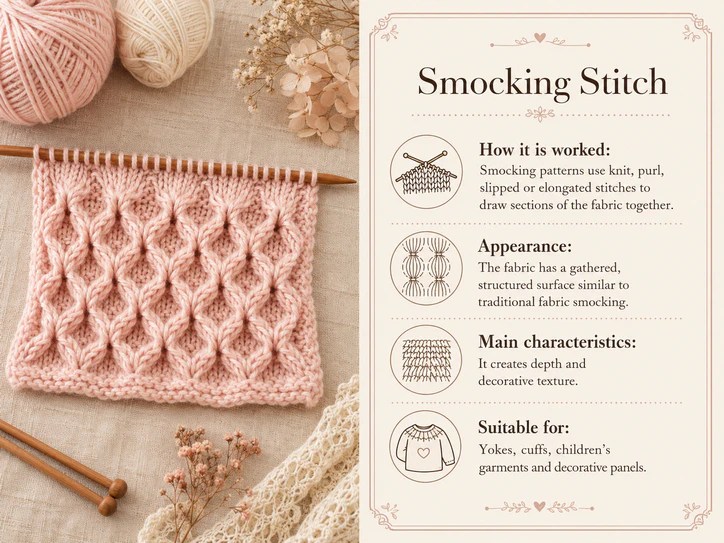
Smocking Stitch
How it is worked:
Smocking patterns use knit, purl, slipped or elongated stitches to draw sections of the fabric together.
Appearance:
The fabric has a gathered, structured surface similar to traditional fabric smocking.
Main characteristics:
It creates depth and decorative texture.
Suitable for:
Yokes, cuffs, children’s garments and decorative panels.
Bobble Stitch
How it is worked:
Several stitches are created from one stitch and then reduced back to a single stitch.
Appearance:
The technique forms a raised, rounded bump.
Main characteristics:
It adds a three-dimensional decorative feature.
Suitable for:
Children’s clothing, blankets, hats and textured motifs.

Chevron Stitch
How it is worked:
Increases and decreases are positioned to create repeated peaks and valleys.
Appearance:
The pattern forms a zigzag or wave.
Main characteristics:
It may be worked as a solid fabric or combined with lace techniques.
Suitable for:
Blankets, scarves, shawls and colourful striped projects.

Choosing the Right Stitch Pattern
When selecting a stitch pattern, consider:
- the skill level required;
- whether the fabric needs to stretch;
- whether the pattern is reversible;
- whether the edges are likely to curl;
- how clearly the texture will show in your chosen yarn;
- whether the finished project needs to be warm, light, firm or drapey.
Smooth, light-coloured yarns usually show cables and textured stitches clearly. Variegated or highly fluffy yarns may hide detailed stitch patterns, but they can work beautifully with simpler designs.
Final Tips
Always read the complete stitch instructions before beginning. Work a tension square and check that you are comfortable with any required increases, decreases, yarn overs or cable crossings.
Start with simple patterns such as garter stitch, stocking stitch, ribbing or moss stitch. Once you are confident with knit and purl stitches, you can progress to lace, cables, colourwork and more advanced techniques.
Learning a selection of knitting stitch patterns will help you create garments and accessories with a wide variety of textures, shapes and decorative effects.